
To begin with, I want to point out something important. There are visionaries who spark action, who light the flame, but it is societies and communities that either promote or fail to promote these actions.
On the occasion of Héritage Montréal's 50th anniversary, I would first like to celebrate the major changes it has brought about, and secondly, look toward its future—the next 50 years.
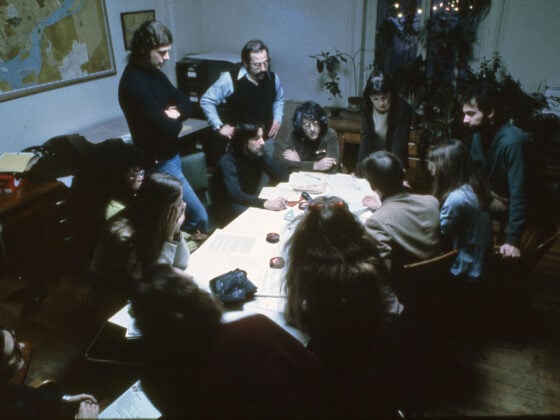
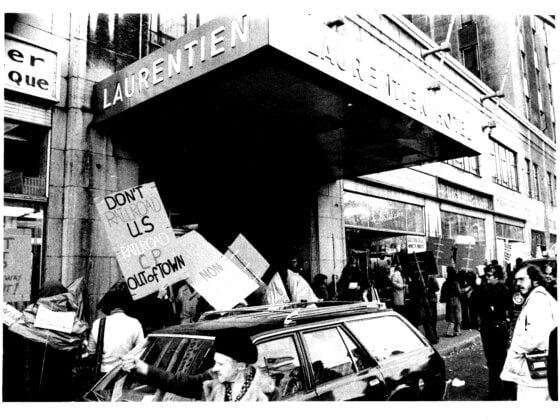
For Héritage Montréal, preserving heritage means promoting it, and promotion depends on the community. That is why Héritage Montréal has raised awareness, mobilized, and engaged the community as well as public and private decision-makers in this initiative. The purpose of this initiative has always been to strengthen community engagement in a spirit of democracy and to ensure the authentic development of Montreal and its neighborhoods.
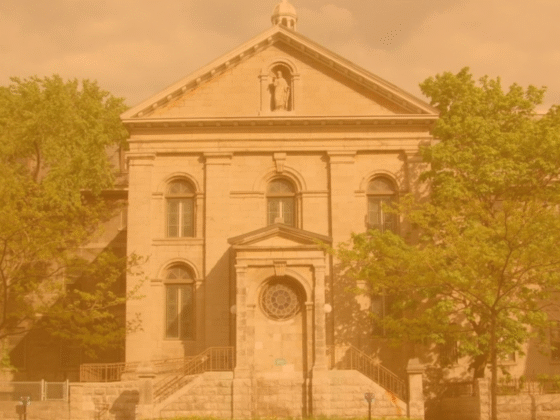
Together, we saved and committed to enhancing the fundamental natural elements of our city—the river with the Old Port and the mountain—through information campaigns and public consultation. We did the same with buildings of great significance, such as the block containing the Grey Nuns' mother house, a magnificent complex including its chapel, now part of Concordia University, or the Prison des Patriotes, so significant to the history of the province, which was threatened with demolition to straighten Notre-Dame Street, and which we saved with Michael Fish and Sauvons Montréal by campaigning for the road to bypass the building, as designed by Michael. And what about entire neighborhoods like Milton Park, where residents formed a housing cooperative where disadvantaged families and individuals continue to live in an environment of high social value, where citizens' rights are expressed in community life, and where a strong urban ecology society contributes to the quality of life, for example by establishing a community center in a disused school and leading to the creation of Lucia Kowaluk Park.

These actions have inspired others. Take, for example, the ongoing development of Hochelaga-Maisonneuve and the Plateau, where green alleys and sustainable stormwater management infrastructure (GDEP) have been created. Or the wonderful little multifunctional community parks developed by the Ville de Montréal boroughs such as Côte-des-Neiges–NDG, Rosemont, and Sud-Ouest, to name just a few. Even in Laval!
I cite these examples to show the importance and far-reaching influence of Héritage Montréal, because with the major societal and environmental changes we are experiencing, which are not going to subside, and new modes of financing for the next 50 years, we are facing a period rich in challenges and therefore in need of innovation and human relations.
Attitudes have changed significantly over the past 50 years. In the 1970s, we thought it was impossible to renovate and reuse heritage buildings and complexes. Today, recycling projects are constantly in the mainstream and specialized media. Across Europe, a vote will soon be held on the House Europe project (presented a few months ago by the CCA), which is against demolition and in favor of redevelopment and recycling. The campaign is aiming to collect one million signatures to present to the European Parliament.
In Montreal, there is much to be done in terms of building maintenance and even decommissioning. Let's look at the Old Port in Old Montreal, where Quebec City has failed to allocate sufficient resources despite insistent rhetoric about the importance of our culture.
Isn't it criminal to do nothing? To fail to form a strong partnership between the city and the province to overcome the housing crisis by accelerating the conversion of large heritage complexes and religious institutions? And to fail to expand the circle of those who can bring solutions for heritage buildings to be redeveloped, such as the exquisite mansions on the McGill campus?

In our metropolitan area, which has five universities, there is an urgent need to create professional training programs that provide a sociological and cultural understanding of our living environments.
To meet the challenges of the next 50 years, we will greatly needHéritage Montréal the involvement of committed individuals who are experiencing these issues, who are free to reflect on them, and who can raise awareness among their fellow citizens. To achieve what we all want—a Montreal with its unique heritage and distinct neighborhoods—we must all work together and find new solutions that combine financing, renovation, and construction—all of us: public authorities, academia, real estate developers, citizen associations, and social economy organizations, including technical housing resource groups.
Concordia salus! Since the pioneering citizen initiatives and public consultations of the 1980s, this has been a distinctive feature of the Montreal model that must be reinforced.
Cover photo: Clara Lacasse

5 comments
I have always appreciated the professional work of Heritage Montreal, and I would like to pay tribute to Ms. Phyllis Lambert for her relentless efforts to preserve all these buildings that were nearly destroyed by Montreal mayors and governments, including Ms. Plante.
Continue to promote our Montreal heritage.
Continue to serve Montreal and its heritage
Thanks to Heritage Montreal
I applaud the good!
At the same time, I mourn the loss of Congregation BETH-EL as an historical site as SOJA is waiting to have the zoning changed so they can build condos on Lucerne and Jean Talon. SOJA bought the property over 8 years ago, with deep pockets, waiting until they can get TMR Mayor and his council to change the by-law in their favor.
Hard work and dedication were not enough.
It's always good to read Phyllis Lambert. Thanks.